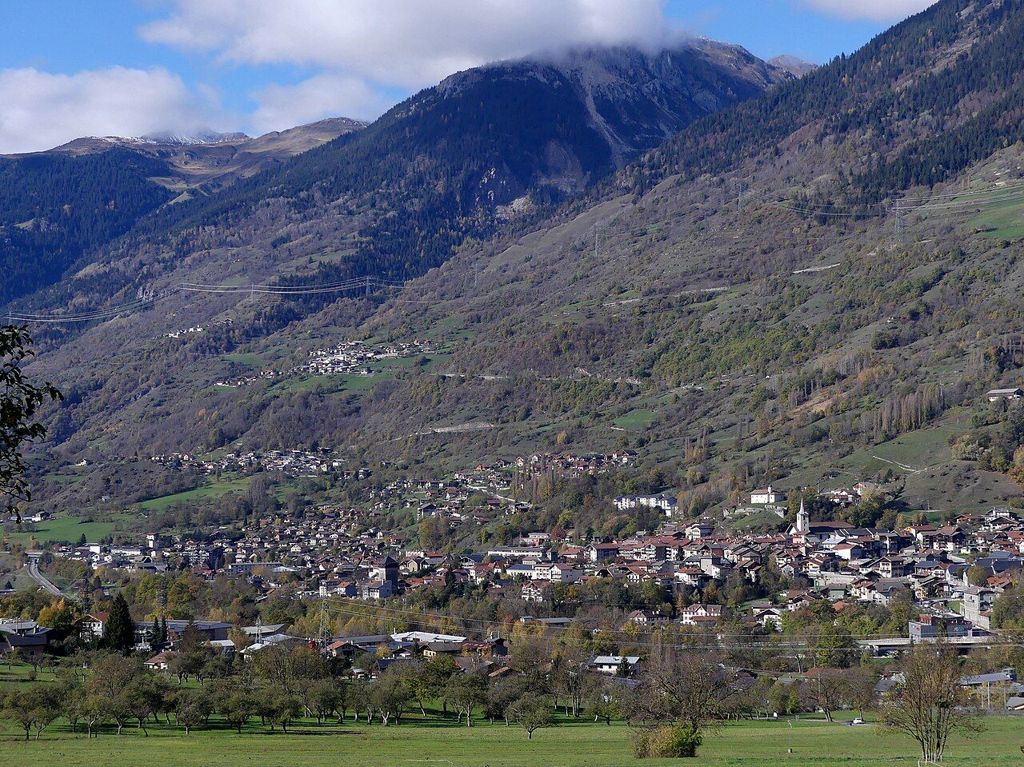
On the valley floor below La Plagne, Aime has an eleventh-century basilica, a railway station and a long history. It is where most journeys into the mountains begin.
Aime lies beside the Isère between Moûtiers and Bourg-Saint-Maurice, with roads climbing from the town to La Plagne on the slopes above. How these notes are kept.
The Tarentaise is the valley of the upper Isère in Savoie, running from the high ground near the Italian border down past Bourg-Saint-Maurice, Aime and Moûtiers toward Albertville. Aime sits on the valley floor about halfway along this stretch. It is a working town with shops, schools and a railway station, and above it, out of sight from the main street, rise the ski stations of La Plagne. Many people pass through without stopping, which is a pity, because the town has one of the oldest churches in Savoie and a good feel for everyday valley life.
The basilica of Saint-Martin
The reason to stop in Aime itself is the basilica of Saint-Martin, a Romanesque church built in the eleventh century. Its walls are plain and solid, made of rough stone, with a tall bell tower and small round-headed windows. Inside, the space feels old and simple, and traces of painted decoration survive on the walls.
The church stands on much older ground. Aime was an important town in Roman times, and remains from that period and earlier have been found under and around the basilica. A visit helps you see the valley as a route that has carried travellers for two thousand years, long before anyone came to ski. Roman roads crossed the Alps by the passes at the head of the Tarentaise, and towns along the valley floor served the traffic of soldiers, traders and pilgrims.
The valley road and railway
A main road and a railway run up the Tarentaise side by side. The road was widened for the 1992 Winter Olympics, whose bobsleigh run still stands on the mountain above Aime. In winter it carries heavy traffic, especially on Saturdays when holiday weeks change over, and queues can build on the approach to the ski resorts. Leaving early or late in the day makes a real difference.
The railway follows the valley as far as Bourg-Saint-Maurice, where the line ends. Aime has its own station, which makes the town the natural rail stop for La Plagne. Regional trains run up and down the valley through the year, and in winter extra long-distance trains reach the valley on busy weekends.
Next along the valley: La Plagne, a ski area of many villages
Moûtiers and Bourg-Saint-Maurice
Downstream from Aime, Moûtiers sits where several valleys meet. It is the gateway to the large ski areas to the south and has an old cathedral and a small historic centre. It is busy in the winter season, when buses and taxis fan out from its station to the resorts above. Out of season it is a pleasant place to walk for an hour, with the river running through the middle of town and the old streets climbing up from the bridges.
Upstream, Bourg-Saint-Maurice is the end of the line and the last sizeable town before the road climbs toward the high resorts and the passes at the head of the valley. From there a funicular runs up to Les Arcs, the other half of the Paradiski area. Between the two towns, Aime is smaller and quieter, which suits people who want shops and a station without the crowds of the bigger hubs.
Getting up from the valley floor
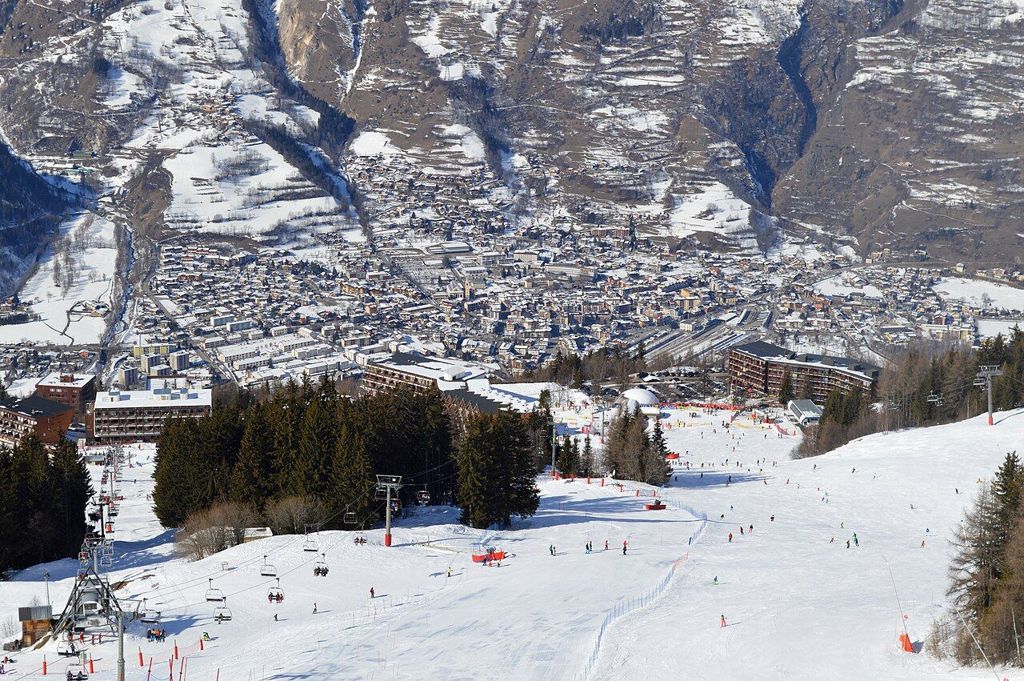
From Aime, roads climb in tight bends to the high stations of La Plagne and to villages on the slopes, such as Macot-la-Plagne and Montalbert. Buses connect the station with the resort during the ski season, and some lifts link the lower villages to the pistes. Check current routes, timetables and lift opening dates before you go, since they change each year.
In winter, carry chains or fit winter tyres, and allow far longer than the distance suggests. In summer the same roads lead up to walking paths, summer lifts and the high pastures where Beaufort cheese is made. Whatever the season, the valley floor is where you start, and Aime is a calm place to do it.