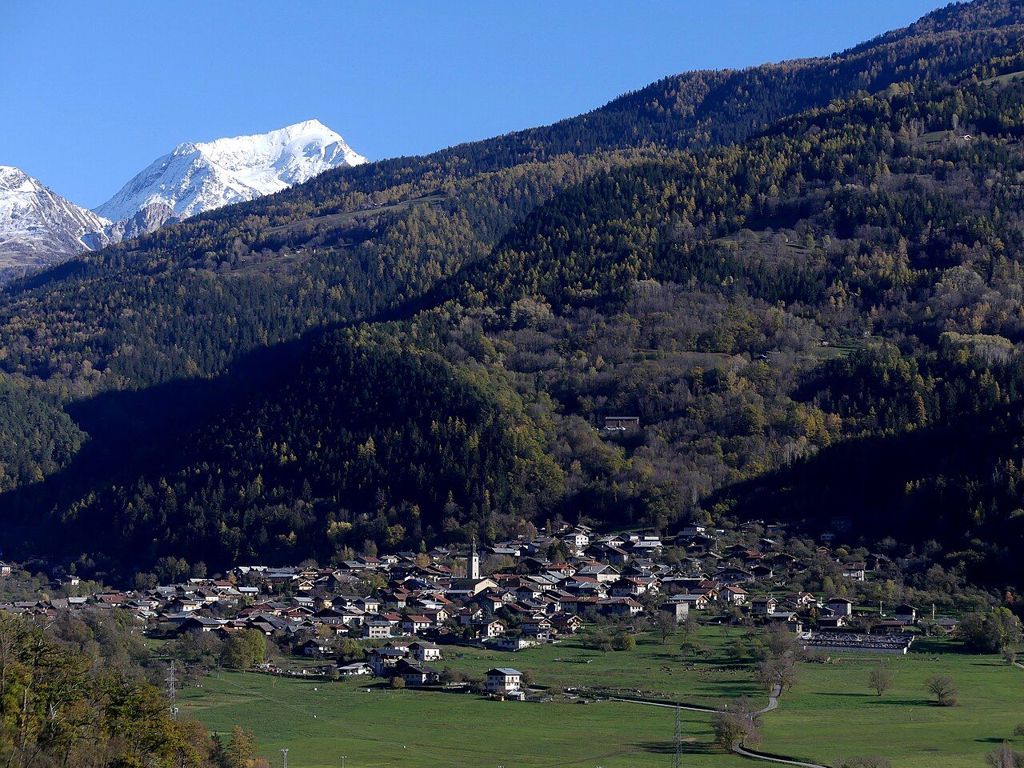
Below the high ski stations sits the village that helped create them. Macot-la-Plagne has an old church, a mining past and a slower rhythm than the resort above.
Macot sits on the south slope just above the Isère, with Aime close by on the valley floor and the La Plagne stations high on the mountain behind it. How these notes are kept.
Macot-la-Plagne is the village whose name the ski area borrowed. It sits on the sunny lower slopes of the Tarentaise, just above the Isère and a short way from Aime, with the high stations of La Plagne hidden on the mountain above. Down here, the houses are of stone and old timber, the streets are steep and narrow, and life runs to the rhythm of a valley village rather than a resort.
Since 2016 Macot has been part of a larger merged commune, La Plagne Tarentaise, together with a few neighbouring villages. You still see the old name on signs, and locals still use it.
An old Savoyard village
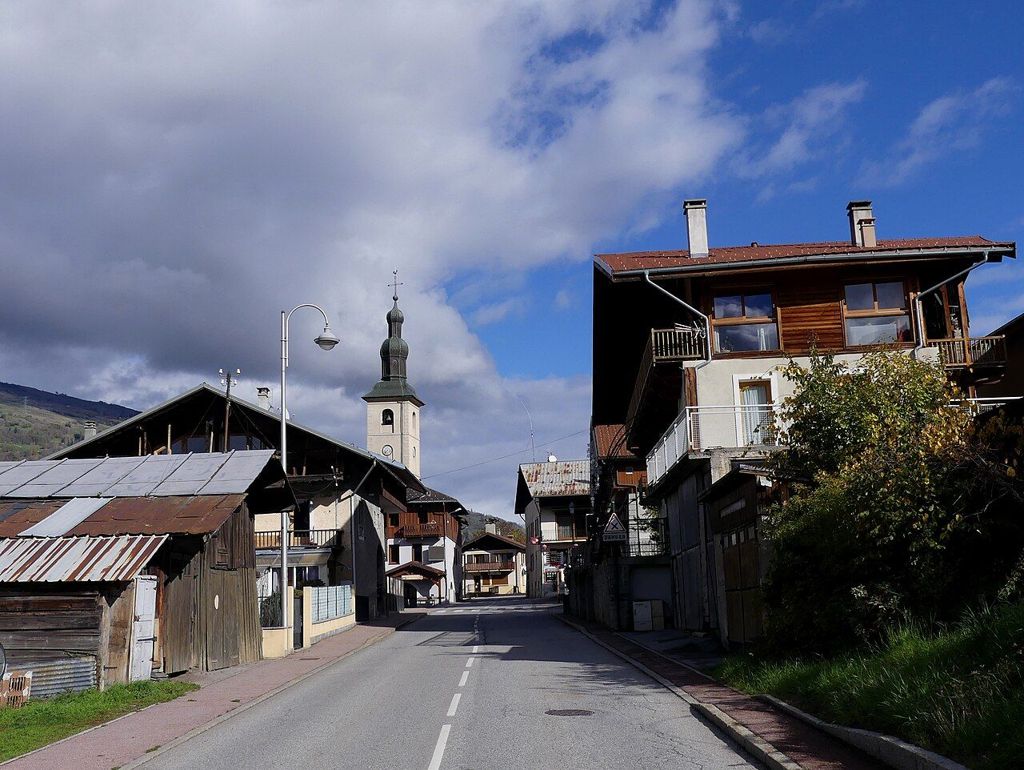
The village grew as a farming community, with grazing in summer on the slopes above and long winters spent close to home. You can see that history in the layout: houses packed close together, barns with wide doors at ground level, and balconies once used for drying hay and wood. Walk slowly up through the centre and you notice fountains, small chapels and the change of building styles as the slope steepens.
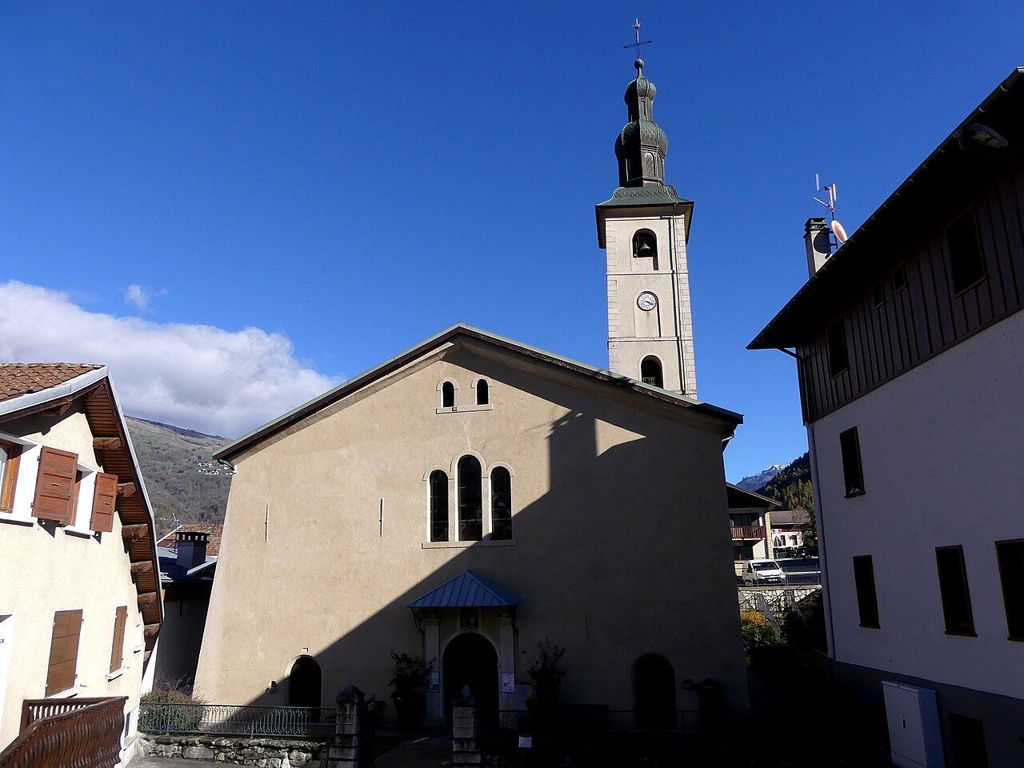
The parish church is the place to start. Like many in the Tarentaise, it was decorated in the baroque style that spread through Savoie in the seventeenth and eighteenth centuries, with a painted, gilded altarpiece that comes as a surprise after the plain outside walls. Services take priority, so keep your voice low if people are at prayer.
The mining past
For a long time, Macot was known less for snow than for what lay under the ground. Lead and silver were mined in the mountainside above the village, and the mines gave work to many families in the valley. When mining declined and closed during the twentieth century, the communes around Macot and Aime looked for another way to keep people in the valley. The answer, from the early 1960s, was a ski resort built high on the pastures above: La Plagne.
Next along the valley: La Plagne, a ski area of many villages
That link is the reason the resort and the village share a name. Some traces of the mining years remain on the mountain, but old workings are dangerous. Never enter a shaft or tunnel, and keep to marked paths.
Getting up to the slopes
From the village, the road to the high stations climbs in a long series of hairpin bends. In winter you need proper tyres or chains, and the drive takes longer than the distance suggests. Buses connect the valley with the resort in the ski season.
Lifts also link parts of the valley side with the ski area, and some lower villages connect directly to the pistes. Which lift runs from where, and in which months, depends on the season, so look at the current lift map before you count on skiing back down to the valley at the end of the day. When snow is thin low down, plan to ride down rather than ski.
From the high stations you reach the whole of the ski area, and from the valley it is a short trip to the station at Aime and the rest of the Tarentaise.
A quieter base
Staying in the valley suits people who want to ski by day and find a calmer evening. Prices for food and supplies are usually closer to everyday levels than up in the resort, and the village shops serve people who live here all year. In summer, Macot makes a good starting point for walks on the lower slopes, for trips up to the alpine pastures where cows graze and Beaufort cheese is made, and for drives along the valley.
Evenings are dark and still, and the stars are easy to see on a clear night away from the lights of the resort.
The trade-off is time. Each ski day starts with a climb up the mountain and ends with the road back down. If that suits you, the village gives you a sense of the Tarentaise that the purpose-built stations, for all their convenience, cannot.