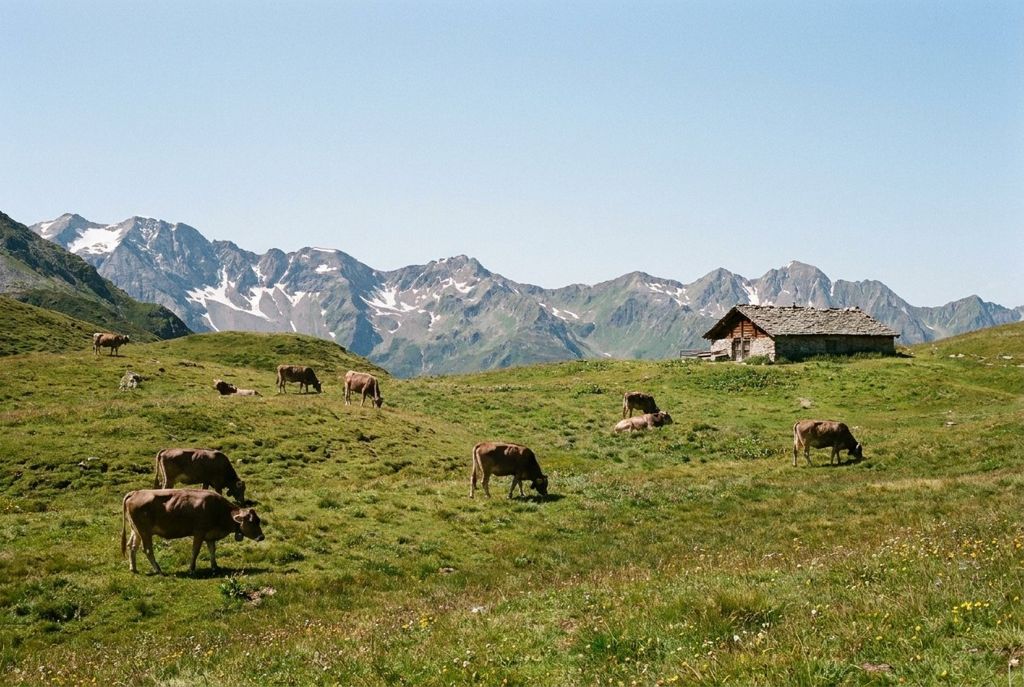
When the snow melts, herds climb to the high pastures of the Tarentaise and Beaufort cheese is made from their milk. Summer here runs to the rhythm of the cows.
Herds move up from the valley farms in early summer to pastures high above the Tarentaise, returning to the valley floor before the first autumn snows. How these notes are kept.
The ski slopes of La Plagne are pastures for most of the year. Once the snow has gone, usually in June, herds of cows climb from the valley farms to the high grass, and the mountain changes character. Bells ring across the slopes, milking happens out in the open, and the milk goes into one of the great cheeses of the Alps.
Cows on the summer grass
Two breeds matter here. The Tarine, from the Tarentaise itself, is a hardy cow with a fawn coat and dark rings around its eyes, well suited to steep ground and long walks between grazing areas. The Abondance, from further north in Savoie, has a reddish-brown and white coat. Beaufort can only be made from the milk of these two breeds.
The move up to the summer pastures is a big moment in the farming year. Herds go up in stages, following the fresh grass as it appears higher on the mountain, and come down again in late September or early October. On the way, you may meet them on paths and roads; slow down, keep dogs on a lead, and let the herd pass.
How Beaufort is made
Beaufort is a hard, pressed cheese with a protected designation of origin, AOP, which ties it to a defined area of Savoie and to strict rules on how it is made. It uses raw milk, and the herds must graze on grass and hay rather than silage. The wheels are large and heavy, with a concave rim around the side that makes them easy to recognise on a shop counter.
The work starts in copper vats, where the milk is gently heated and curdled, then cut into small grains and stirred. The curd is lifted out in cloth, packed into a wooden hoop that gives the wheel its curved side, and pressed. The cheese is then salted and aged for several months in cool cellars, turned and rubbed by hand. The taste ranges from mild and buttery in younger wheels to deeper and more savoury in older ones. Cheese made from summer milk is often sold as Beaufort d'été, and many people find it the richest of the year, with a pale yellow colour that comes from the flowers and grasses of the high pastures. Winter cheese, made from hay-fed herds in the valley, is paler and milder.
Next along the valley: Champagny and the edge of the Vanoise
The alpage version
The most prized version is made right up on the summer pastures, from the milk of a single herd, soon after milking. It carries the word alpage on its label. Producing it is hard work: the cheese is made twice a day, by hand, in small mountain buildings, all summer long. Only a small share of all Beaufort is made this way.
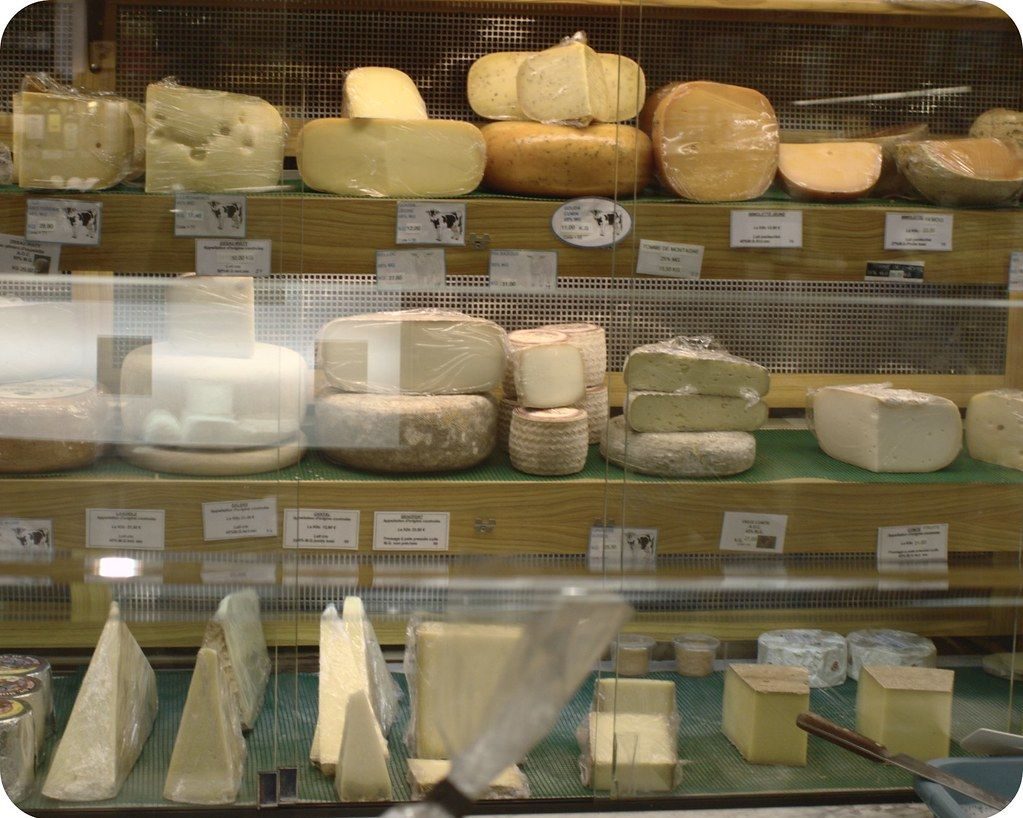
Farm and dairy visits are possible in some places. Cooperative dairies in the valley often have viewing areas or tours, and some summer pastures welcome visitors at milking or cheesemaking time. Arrangements change from year to year and depend on the farmers' work. If you buy cheese to take home, a cool bag helps on the drive.
Summer lifts and walking
In July and August some of the lifts of the ski area run for walkers and mountain bikers, which saves a long climb and puts you straight onto the high paths.
From the top, paths wander between pastures, lakes and viewpoints across to Mont Blanc and the Vanoise. Short loops suit families, while longer walks link one pasture to the next along the contours of the mountain. Afternoon storms are common in high summer, so start early and keep an eye on the sky. Close every gate you open, walk around herds rather than through them, and give a wide berth to any guard dogs with sheep flocks. Down in the valley, a visit to Aime and its old basilica makes a good change on a day of poor weather.