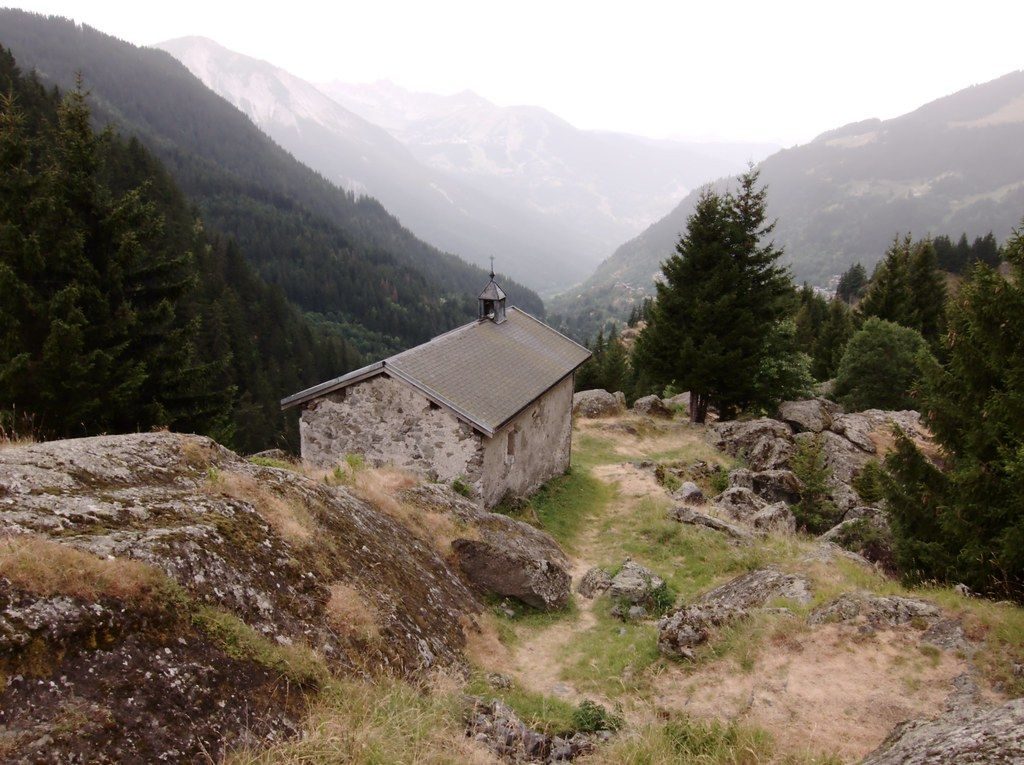
A side valley south of La Plagne leads from a ski village to the border of France's first national park. Champagny-le-Haut is where the lifts stop and the wild country starts.
Champagny lies in a side valley that opens toward Bozel and Moûtiers below, while its upper valley climbs east toward the high peaks and glaciers of the Vanoise. How these notes are kept.
Champagny-en-Vanoise sits in its own side valley on the southern edge of La Plagne, facing the sun and backed by steep forest. In winter it is linked into the ski area by lifts, so you can ski from the village into the main bowl of La Plagne and back. In summer it turns toward the other side of its valley, where a narrow road leads through a gorge to Champagny-le-Haut and the edge of the Vanoise National Park.
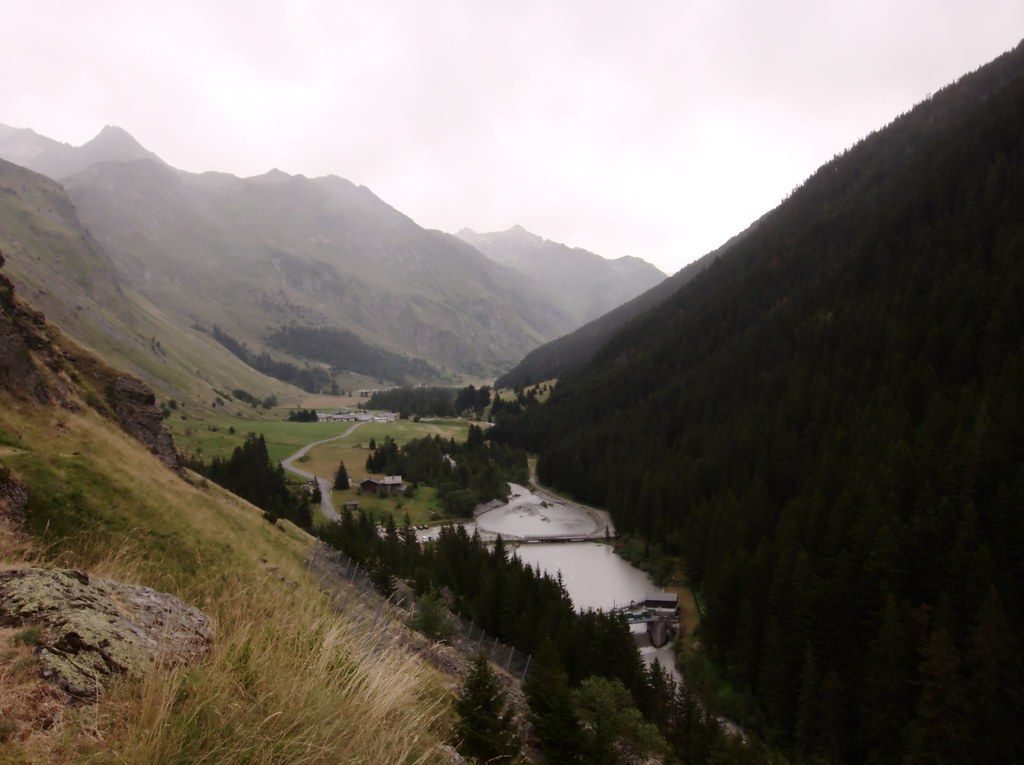
The lower village has a baroque church, old houses and a quiet centre, and it keeps a calmer feel than the big stations even in the busiest weeks of winter. Champagny-le-Haut is a different place: a long, flat-bottomed upper valley with a few hamlets, open meadows and a river, closed in by high slopes on either side.
Champagny-le-Haut
The road to the upper valley climbs through the gorge and then opens out. Once you are through, the noise of the ski area is gone. Hamlets of stone and timber sit along the valley floor, and the slopes above rise toward peaks that keep snow well into summer. At the far end, paths continue up toward high passes and the heart of the park.
In winter the upper valley becomes a quiet place for cross-country skiing and snowshoeing on prepared trails along the valley floor. The road can close or need chains after heavy snow, and the steep slopes above the valley can release avalanches, so stay on the marked trails and check conditions and the avalanche bulletin before you go.
The Vanoise National Park
The Vanoise National Park was created in 1963, the first national park in France. One of the reasons for creating it was to protect the Alpine ibex, which had become very rare in the Alps. The park has a core zone, where the strictest rules apply, and a wider surrounding area that includes villages such as Champagny.
Next along the valley: Aime and the Tarentaise valley
In the core zone, a few simple rules matter most. Dogs are not allowed, even on a lead. Drones are not allowed. You may not pick plants or flowers, and you should leave stones, bones and anything else you find where they lie. There are also rules on camping, fires and bivouacs that differ from place to place and are posted on the boards at the trailheads.
Ibex, chamois and marmots
The upper valley is good ground for wildlife. Marmots are the easiest to see: listen for their sharp whistle in the meadows from late spring to early autumn, and look for them sitting upright on rocks near their burrows. Chamois move across steep grassy slopes, often higher than you expect. Ibex, with their long curved horns, tend to keep to rocky ground and can be surprisingly calm if you stay still and keep your distance.
Early morning and late evening are the best times. Bring binoculars rather than trying to get closer, never feed the animals, and give mothers with young a wide berth. Look up as well as around you: golden eagles and bearded vultures hunt over the high valleys of the Vanoise, and a large shadow passing over the meadow is often the first sign of one.
Summer walks
From the end of the road, paths fan out in several directions. Easy walks follow the valley floor between hamlets and meadows, past waterfalls and old farm buildings. Longer routes climb to high lakes, mountain huts and passes toward the neighbouring valleys. Distances look short on a map but the climbs are long, and weather in the high mountains turns quickly in the afternoon.
Start early, carry water and warm layers even in July, and turn back if storms build. Huts are often full in high summer. You may meet herds grazing on the high pastures, the same cows whose milk goes into Beaufort cheese; close gates behind you and walk calmly past them.