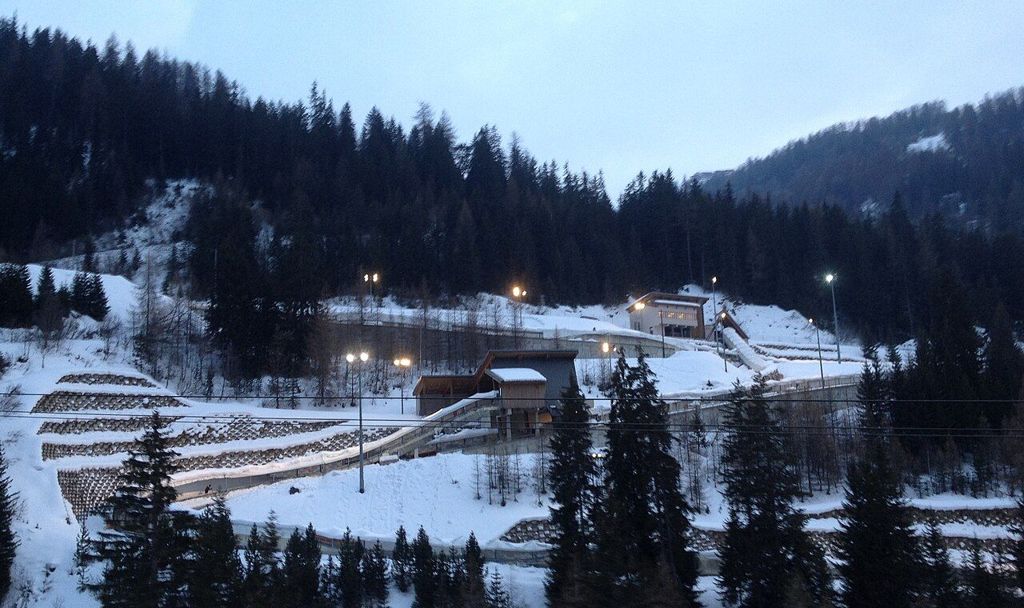
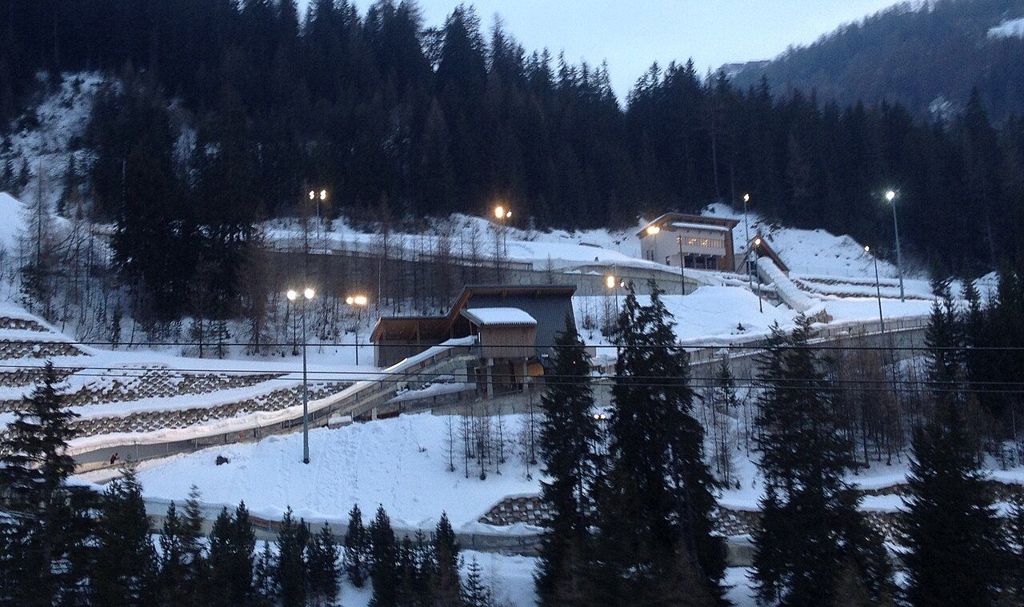
Built for the Albertville Winter Games, the bob run at La Plagne still carries athletes and passengers down its curves. Here is how it works now and what the Olympics changed.
The track runs down the mountainside below La Plagne's high stations, part of a string of 1992 Olympic venues that reach down the Tarentaise to Albertville. How these notes are kept.
In February 1992, the Winter Olympics came to Savoie. Albertville gave its name to the Games, but the events were spread across the mountains of the Tarentaise and nearby valleys, and La Plagne was given the bobsleigh and luge. A new track was built on the slope below the high stations for the occasion, and it is still there, still iced every winter, and still in use.
Built for the Albertville Games
The run is a concrete channel cut into the hillside, roughly one and a half kilometres long, with around nineteen bends. Pipes under the surface carry a refrigerant that keeps the ice frozen hard, so the track does not depend on cold nights alone. Sleds reach very high speeds on the steepest sections, and the riders feel strong forces in the banked curves.
Building a permanent track was a large commitment for a ski area. Many Olympic sliding tracks around the world have fallen out of use once the Games moved on. The one at La Plagne has kept going, and it remains the main venue for the sport in France.
How the track is used now
Through the winter, the track has several kinds of users. National teams and clubs train on it, and it has hosted international races in the years since 1992. Alongside the athletes, the track runs passenger rides for the public, which is how most visitors come to know it.
The passenger rides come in different forms. In some, you sit in a soft, raft-like sled with a few other people and no one steering. In others, you sit behind a trained pilot in a real bob, at speeds closer to what the athletes reach. There are also small sleds that you ride and steer yourself on a reduced course. Each type has its own age limits and health conditions; back and neck problems and pregnancy usually rule people out.
Next along the valley: La Plagne, a ski area of many villages
Watching and riding
If you only want to watch, there are places along the track where you can stand beside the curves and see sleds go past. Training sessions and races are worth timing a visit around, though schedules are set by the sport, not by visitors, and can change at short notice. Dress for standing still in the cold: it feels much colder beside the ice than it does skiing. Children love the sound of a bob passing, a rising roar and then silence.
A ride lasts under a minute and feels much shorter. Follow the briefing to the letter, keep your arms and head inside the sled, and hold on the whole way. The track sits close to the ski area, so many people fit a ride into a ski day, but the road up from the valley reaches it too.
What the Games left in the Tarentaise
The 1992 Olympics reshaped the valley more than any single venue suggests. The main road up the Tarentaise was widened and improved to carry the crowds, which still cuts the drive from Albertville toward Moûtiers. Several resorts gained lifts and facilities that are still in use, and the villages of the valley gained a new place on the international map.
In Albertville itself, the Olympic park has a tall tower, open space and a signpost pointing toward the other cities that have held the Winter Games. It is a short stop on the way up or down the valley.
Not every legacy was welcome. Some venues cost more than they ever returned, and the building work left scars on the slopes that took years to soften. The bob run sits between the two views: costly to keep running, but one of the few Olympic tracks of its time that still carries sleds every winter. Back in the valley, villages such as Macot-la-Plagne watched the resort above them grow quickly in those years.